Your naturopathic treatment is HST-exempt, so you do not charge tax on consultations and care. The dispensary is a different story. The supplements, tinctures, and remedies you sell are taxable, and once those product sales get big enough you have to register and charge HST on them, even though your treatment stays exempt.
Naturopathic practices almost always run two businesses under one roof: the care you provide, and the products you dispense. The tax system treats those two halves differently, and the dispensary is where most of the confusion lives.
Treatment: exempt
Naturopathic doctors were added to the government’s list of exempt health professions back in 2014. Since then, naturopathic services provided for health care purposes are HST-exempt. You do not charge tax on a consultation or a treatment plan, and you do not register just to provide care.
The usual trade-off applies. Because treatment is exempt, you cannot claim back the HST you pay on the costs of providing it, your rent, your equipment, your clinic software. That tax stays with you as a cost of doing business.
Naturopathic care
Consultations and treatment for health purposes. No HST charged. No HST claimed back on care costs.
The dispensary
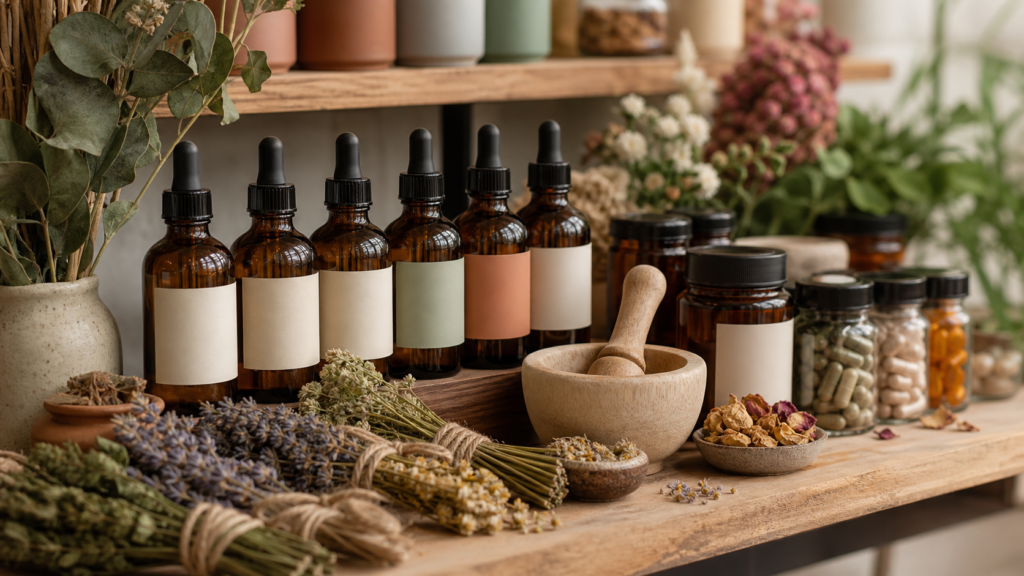
Supplements, botanicals, herbal medicines, and tinctures sold to patients are separate, taxable sales.
The dispensary: taxable
Here is the rule that surprises people. When you sell a bottle of supplements or a tincture, the government does not see that as part of your exempt treatment. It sees a separate sale of a product, and products like these are taxable.
That holds even when the supplement is part of a treatment plan you designed. The advice is exempt. The bottle is taxable. They are two different supplies in the eyes of the tax system.
When you have to start charging HST on products
You are not required to register the moment you sell your first bottle. The trigger is the $30,000 small-supplier threshold, measured on your taxable sales over four quarters. For a naturopath, that means your dispensary and product sales, not your exempt treatment income.
Once your product sales cross $30,000, you are expected to:
- Register for GST/HST.
- Charge HST on the products you sell, while your treatment stays exempt.
- File returns on the product side.
The silver lining: once you register for the dispensary, you can claim back the HST you pay on the inventory you buy to resell. So the tax you charge on a supplement is offset by the tax you paid to stock it. You are collecting and remitting the difference, not eating the whole thing.
Running two tax worlds in one set of books
A naturopathic practice with a busy dispensary is the clearest example of a mixed business. Your bookkeeping has to keep the two sides apart, or the numbers fall apart at filing time:
- Treatment income: exempt, tax-included, nothing to remit.
- Product sales: taxable once registered, HST collected and tracked.
- Costs: split between the dispensary, where you can claim the tax back, and the clinic, where you cannot.
When that split is clean, your HST returns take minutes. When treatment and dispensary income are dumped into one pile, you either over-remit or under-remit, and both cost you.
The quick gut check
Ask yourself one thing: how much product am I selling a year? Under $30,000 and the dispensary can usually stay simple. Heading past it and you need to register, start charging HST on products, and set the books up to keep the two halves separate.
If you are not sure which side of that line your dispensary is on, tell us roughly what you sell and we will tell you whether it is time to register and how to keep it clean.